
The Best optometrist Treatment
Orthodontic treatment is a specialized branch of dentistry focused on diagnosing, preventing, and correcting misaligned teeth and jaws. It involves the use of braces, clear aligners (like Invisalign), retainers, and other appliances to move teeth into their proper positions over time.
Orthodontic treatment not only enhances your smile but also makes it easier to clean your teeth and maintain good oral health reducing the risk of cavities, gum disease, and jaw strain.
We diagnose and repair any problem
Diagnosis of Orthodontic Problems
Orthodontic diagnosis involves a detailed assessment of your dental and facial structures to identify issues such as:
Crooked or crowded teeth
Gaps between teeth
Overbite, underbite, or crossbite
Jaw misalignment
Improper bite (malocclusion)
Impacted or missing teeth
Diagnostic Tools Include:
Clinical Examination: To assess bite, alignment, and jaw function.
Digital X-rays: To evaluate tooth roots, bone structure, and unerupted teeth.
Photographs: For facial and dental analysis.
Dental Impressions or 3D Scans: To create accurate models of your teeth and bite.
Bite Analysis: To evaluate how your upper and lower teeth come together.
Treatment Options in Orthodontics
Based on the diagnosis, a personalized treatment plan is developed using one or more of the following methods:
1. Braces
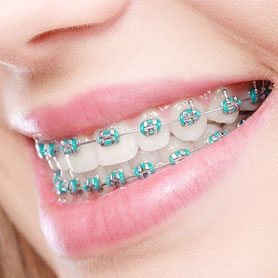
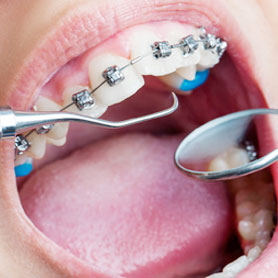
Traditional metal or ceramic braces use brackets and wires to gradually move teeth into proper alignment.
2. Clear Aligners (e.g., Invisalign)
Custom-made, removable trays that straighten teeth discreetly without brackets or wires.
3. Retainers
Used after treatment to maintain the new position of your teeth and prevent relapse.
4. Orthopedic Appliances
Devices such as expanders or headgear are used, especially in growing children, to guide jaw development.
5. Surgical Orthodontics
In severe cases, corrective jaw surgery may be needed in combination with braces to achieve functional alignment.
Common signs include crooked teeth, gaps, bite problems (like overbite or underbite), jaw pain, or difficulty chewing. A consultation with an orthodontist can confirm if treatment is needed.
Diagnosis includes a clinical exam, dental X-rays, photographs, and impressions or digital scans to analyze the position of your teeth and jaw alignment.
The American Association of Orthodontists recommends an initial evaluation by age 7. However, orthodontic treatment can be effective at any age, including adulthood.
Donec feugat egestas quam in sollici tudine. Mauris and maxi mius dig nissim mauris, vel varus arcu auct or andy Praesent.
No. Depending on the severity and type of problem, alternatives like clear aligners, retainers, or early interceptive treatments may be recommended.